How can MT4 gold EA backtests test spread sensitivity?
Keep test conditions fixed, change only the spread, compare trade count, net profit and drawdown, and identify how much results depend on execution costs.
Author: Thomas | MT4 practical | Originally scheduled for Nov 7 18:00, republished on Nov 8, 2026.
Summary: Keep test conditions fixed, change only the spread, compare trade count, net profit and drawdown, and identify how much results depend on execution costs.
First establish a reproducible baseline
In the MT4 Strategy Tester, select the EA, gold symbol, chart timeframe and historical range, then record the EA version, parameters, initial capital, quote digits and modeling method. First turn off optimization, run a fixed-parameter test and save the report. Different brokers may use different gold symbol names, contract specifications and historical data. Check these conditions before switching platforms; otherwise test differences may come from data and contracts rather than spread.
When the tester can set spread, first record the unit used by the field. Points in the terminal are usually tied to the symbol's quote precision and cannot be treated directly as dollars. Check the symbol specification and minimum price change, then convert the test spread into an understandable price difference. Historical data and modeling method should also be saved for later review.
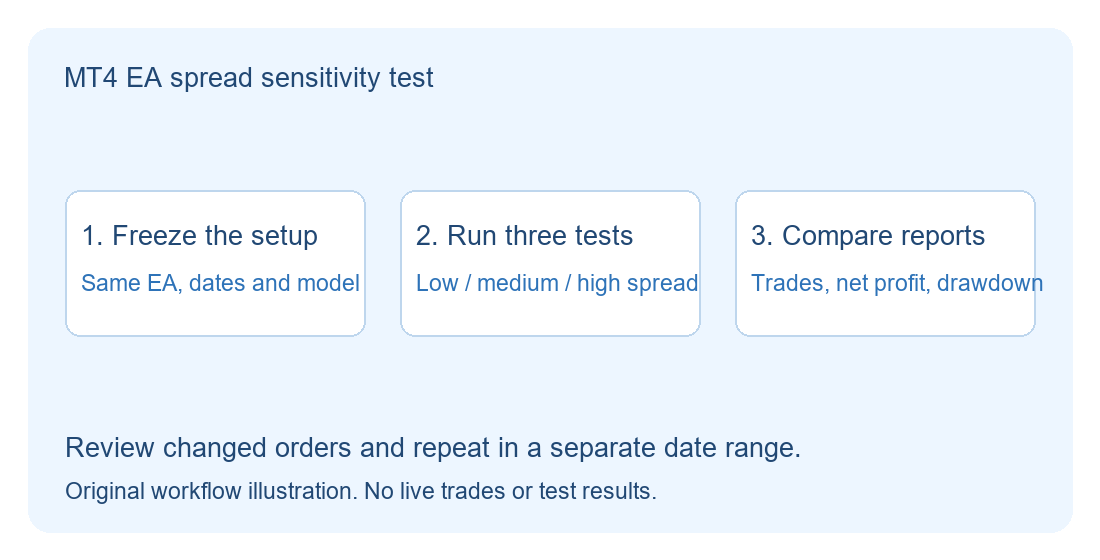
Change only the spread, then see which results change
Keep the same test window and model, and run low, medium and high tiers separately. The tiers should come from verifiable quote records on this platform, such as normal liquid periods and wider-spread periods. If reliable records are not yet available, use clearly labeled assumed tiers for stress testing. Save the actual input values each time; do not optimize entry and exit parameters while adjusting spread. This makes result changes easier to trace.
For each tier, compare at least net profit, trade count and maximum drawdown. Short-term EAs have a smaller expected margin per trade, so when costs rise, profit may be noticeably compressed. If the number of trades also changes, sample a few examples from the order list and check trigger price, order direction and entry/exit times. Spread changes may alter both triggers and exits, so you cannot simply subtract a fixed amount from the original backtest total profit instead of rerunning.
Keep trade details when reading reports
Suppose the low-spread and medium tiers have similar trade counts, but the high tier's trade count drops sharply while drawdown expands. This combination deserves further inspection: whether changes are concentrated in specific periods, whether very narrow exit distances are involved, or whether the EA has a maximum spread filter. If the filter skips some orders, the change in net profit includes both the effect of execution costs and the effect of a changed trade set. Trade-by-trade comparison helps distinguish the two.
For the same tier, you can also rerun on another historical window to see whether results depend on a few trades. The modeling quality in the report reflects the test data and modeling situation and cannot by itself measure future actual fills. If test results are abnormal, also check the log for errors and missing records to confirm the EA actually ran with the expected parameters.
When further verification is needed
Static spread tiers are suitable for comparing cost sensitivity. Actual spreads change over time, and slippage, rejected orders, latency and fill rules may also affect execution. If only a small cost increase flips the result, first check parameters and order details, then observe with an independent sample or demo account. Demo results and historical tests should both state the environment and limitations. The goal of the report is to find the conditions under which a strategy tends to fail, and it cannot be used to promise returns.

MT4 EA troubleshooting guides →